Visitors often enter with a list of famous prisoners and escape plots. The building offers a more important question: how did an institution convert hundreds of individual lives into a controlled schedule? Read the Cellhouse as a system first, then place specific stories within it.
Begin with the borrowed building
The main concrete cell building predates the federal penitentiary. It was constructed for the military prison and modified after the Department of Justice took control. That reuse explains why different eras remain embedded in one structure. Federal officials added security systems and reorganized spaces, but they did not begin with an empty island.
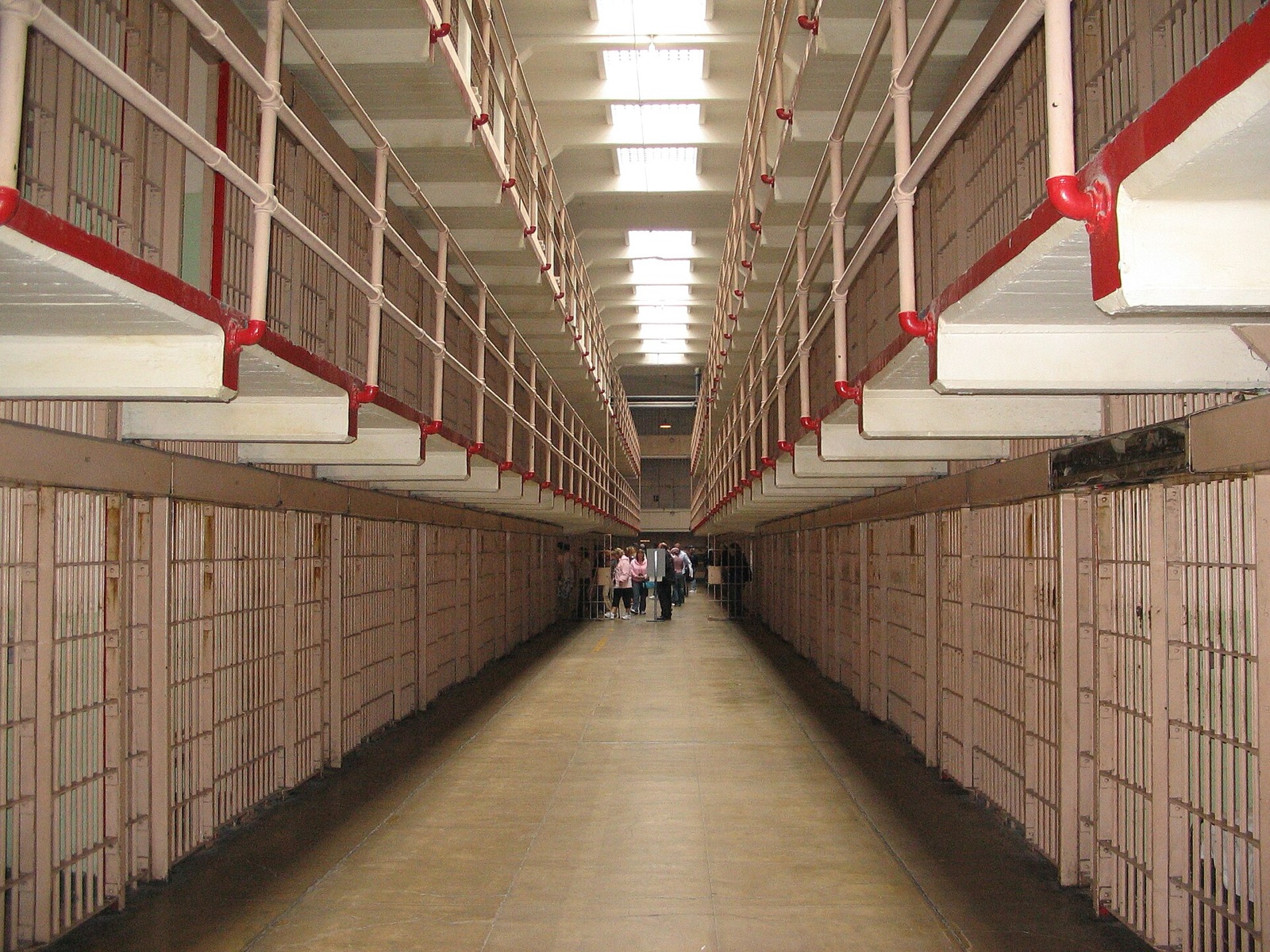
Stand where multiple cell tiers and corridors can be seen at once. Long sightlines help officers observe movement. Gates divide one route into controlled segments. Elevated gun galleries separated armed staff from the incarcerated population. Architecture reduced spontaneous choice.
Notice the names imposed on corridors
Corridor nicknames such as Broadway and Times Square used the language of a lively city inside a place defined by restricted movement. The contrast is not accidental humor alone. San Francisco was visibly close from parts of the island, yet ordinary city life remained inaccessible.
Listen to the building even when the official audio program is paused. Hard surfaces amplify doors, footsteps and voices. Sound traveled beyond sight and made the institution present at every hour. Crowds today create a different noise, so finding a brief quiet moment can clarify the building’s acoustic power.
A standard cell is evidence, not a prop
Small cells communicated the limits of personal space. Furnishings were functional and closely regulated. Individual prisoners adapted within narrow rules, but staged displays should not be mistaken for untouched rooms frozen at the moment the prison closed. Interpretation uses preserved fabric, reconstruction, records and oral history together.
Photograph without performing incarceration. Reaching through barriers, staging comic “prisoner” poses or treating isolation cells as entertainment can trivialize real confinement. A better photograph documents scale, light, repetition or the relationship between a cell and corridor.
Routine made the prison
Counts, meals, work, recreation, correspondence, visits and lights-out created the ordinary structure of federal prison life. Privileges could be earned or removed. The institution’s reputation rested not only on walls but on transfer policy: Alcatraz held people selected from other federal prisons because officials viewed them as escape risks, disruptive figures or management problems.
This focus corrects a popular misconception. Alcatraz was not designed as a place where every person had committed the most notorious crime. It functioned as a high-control federal prison within a larger prison system.
Isolation deserves precise language
D Block included cells used for segregation and punishment under varying conditions. Interpretive material may discuss darkness, restricted contact and sensory deprivation. Avoid turning those accounts into a courage test. The relevant question is what isolation did to time, perception and human contact—and what institutional rules allowed it.
A dark cell is not frightening because a legend says it is haunted. It is frightening because isolation was an administrative practice.
Escape stories need an evidence label
Escape attempts are part of the site’s history, especially the June 1962 escape associated with Frank Morris and brothers John and Clarence Anglin. Visitors can examine interpreted spaces and learn how tools, dummy heads and a utility corridor figured in the plan. The fate of the escapees remains unresolved; confident claims of survival or death go beyond established evidence.
Separating evidence from theory makes the story stronger. Evidence includes the physical route, recovered objects and official investigation. Re-creations illustrate a possibility. Later sightings, family stories and popular media may be interesting without becoming proven fact.
Staff and families complicate the island
Correctional officers worked inside the Cellhouse while many staff families lived elsewhere on Alcatraz. Children traveled to school in San Francisco; apartments and social spaces existed within sight of the prison. This does not soften imprisonment. It shows how an institution can be ordinary for one group and coercive for another at the same address.
Use the audio program as one voice
The Cellhouse audio experience has historically drawn from correctional officers and formerly incarcerated people. Check current NPS information for availability, format, languages and accessibility. Let the program guide attention, but pause when necessary and compare it with signs, objects and the wider island history.
- Identify what came from the military prison and what federal officials changed.
- Read corridors as systems of visibility and controlled movement.
- Treat displayed cells as interpreted evidence, not theatrical sets.
- Separate documented escape evidence from later speculation.
- Notice the different island lives of prisoners, staff and families.
- Carry the story beyond 1963 to the Indigenous occupation.