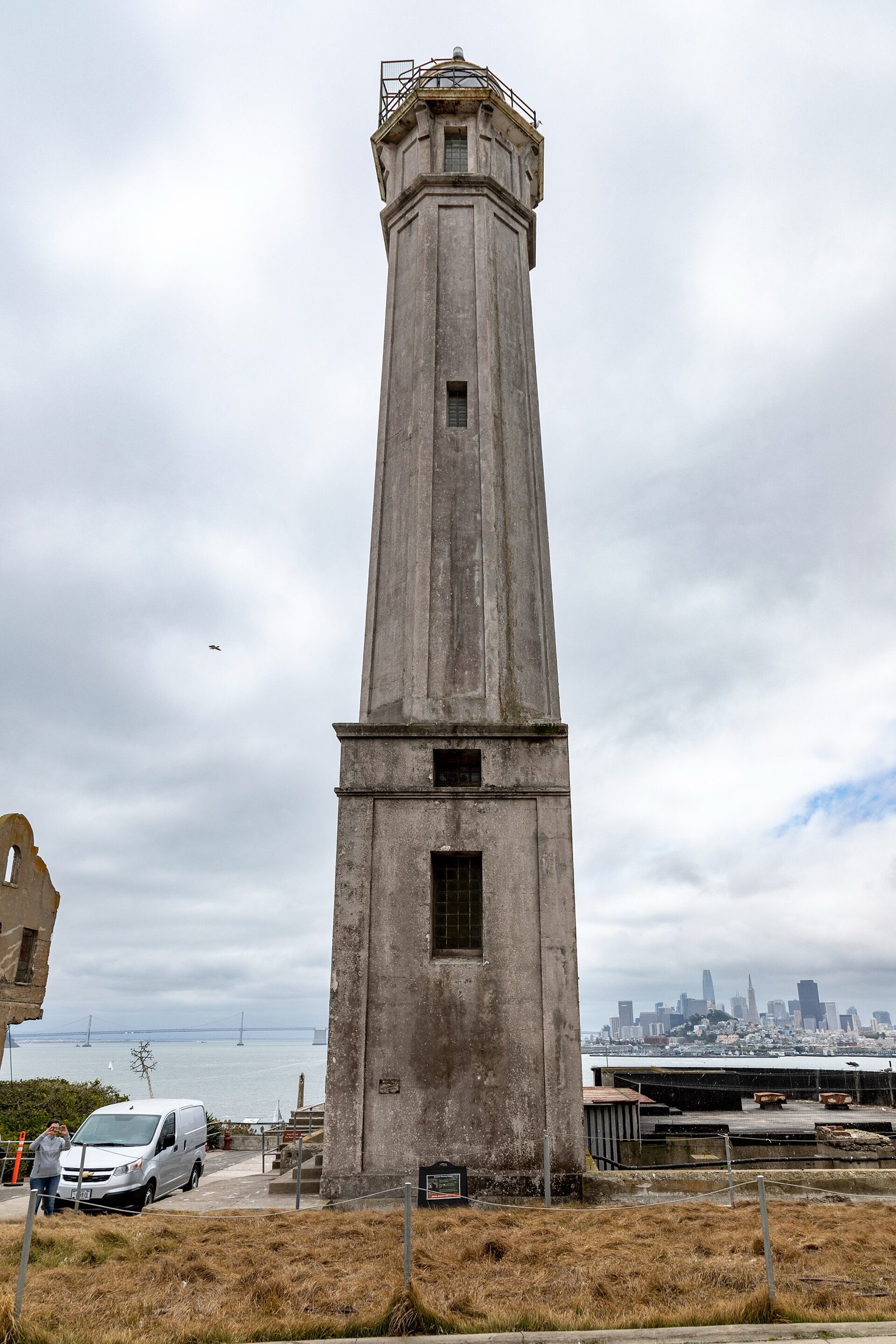
The island rises sharply from its dock. The National Park Service describes the main route to the Cellhouse as roughly a quarter mile with about 130 feet of elevation gain—often compared with climbing a thirteen-story building. Exact open routes and assistance can change, so the numbers are a planning frame rather than a promise that every visitor will follow the same path.
The weather is maritime, not downtown
San Francisco’s neighborhood forecasts can hide strong local differences. On the island and ferry, wind crosses cold bay water with little shelter. Sun can feel intense in an exposed yard while a shaded passage remains cool. Fog may arrive, lift or reshape the view during one visit.
Dress in layers that can be secured. A light insulating layer plus a wind-resistant outer layer is more adaptable than one bulky garment. Hats should fit securely; loose scarves and papers can become hazards on a deck. Sunglasses and sun protection can matter even when the morning begins gray.
Shoes solve more than distance
The challenge is not a long hike but repeated grade, standing and transitions across pavement, ramps, steps and historic surfaces. Stable walking shoes with grip are more useful than footwear chosen only for a waterfront restaurant later in the day. A visitor who can comfortably walk a flat mile may still need breaks on the uphill route.
Use railings where provided and give descending visitors room. Wet conditions can change traction. Do not enter a closed path to avoid a slope; closures can protect unstable structures, work areas or nesting birds.
Accessibility is a service question, not a guess
The National Park Service publishes current Alcatraz accessibility information. It has described accessible ferry features, accessible areas and a mobility transportation service between the dock and the Cellhouse area, commonly identified as S.E.A.T. Service details, capacity, boarding procedure and operating conditions must be confirmed for the actual visit.
Contact the official sources in advance if someone needs step-free boarding information, mobility assistance, sign-language or captioning information, audio-description options, service-animal guidance or another accommodation. State the functional need clearly rather than relying on a broad label. The official team can explain what is currently available.
Build an energy budget
Think of the visit in energy units: ferry movement, uphill travel, standing in the Cellhouse, outdoor loops and the return descent. Spending everything on the first climb can make the most meaningful historical or outdoor stop feel rushed. Place rest before exhaustion, not after it.
| Condition | Likely effect | Planning response |
|---|---|---|
| Wind or fog | Colder deck and reduced views | Layer clothing; treat skyline views as a bonus |
| Steep grade | Slower ascent and greater exertion | Add breaks; verify mobility transportation |
| Uneven surface | More attention required underfoot | Use stable shoes and open routes |
| Seasonal closure | Outdoor loop may change | Choose a second priority elsewhere on the island |
Water, food and medication
Check current NPS rules on where food is permitted and what visitor services are available. Carry enough water for the group in containers allowed by current rules. Do not assume a full food service exists on the island. Visitors with time-sensitive medication or medical equipment should plan according to their clinician’s advice and official transportation rules.
Bayframe 33 cannot give individualized medical guidance. Anyone uncertain about motion sickness, exertion, cold exposure or a health condition should consult an appropriate healthcare professional before the trip.
Families and sensory load
Wind, horns, vessel movement, echoing Cellhouse corridors and crowd flow can create a demanding sensory sequence. Explain the day before boarding, identify quieter outdoor pauses and avoid promising a precise order that current operations may change. Ear protection may help some visitors if it is safe and suitable for them, but everyone must remain able to follow safety instructions.
The conditions checklist
- Read current NPS alerts and accessibility information.
- Check the forecast, then add a layer for exposed bay wind.
- Choose secure, stable walking shoes.
- Confirm current mobility assistance before the departure day.
- Carry water and follow current island food rules.
- Choose rest points before fatigue becomes urgent.
- Keep a flexible second priority for closed outdoor routes.